
Pool Coping Replacement: Signs, Materials and What to Expect
· By Leonardo Ferreira
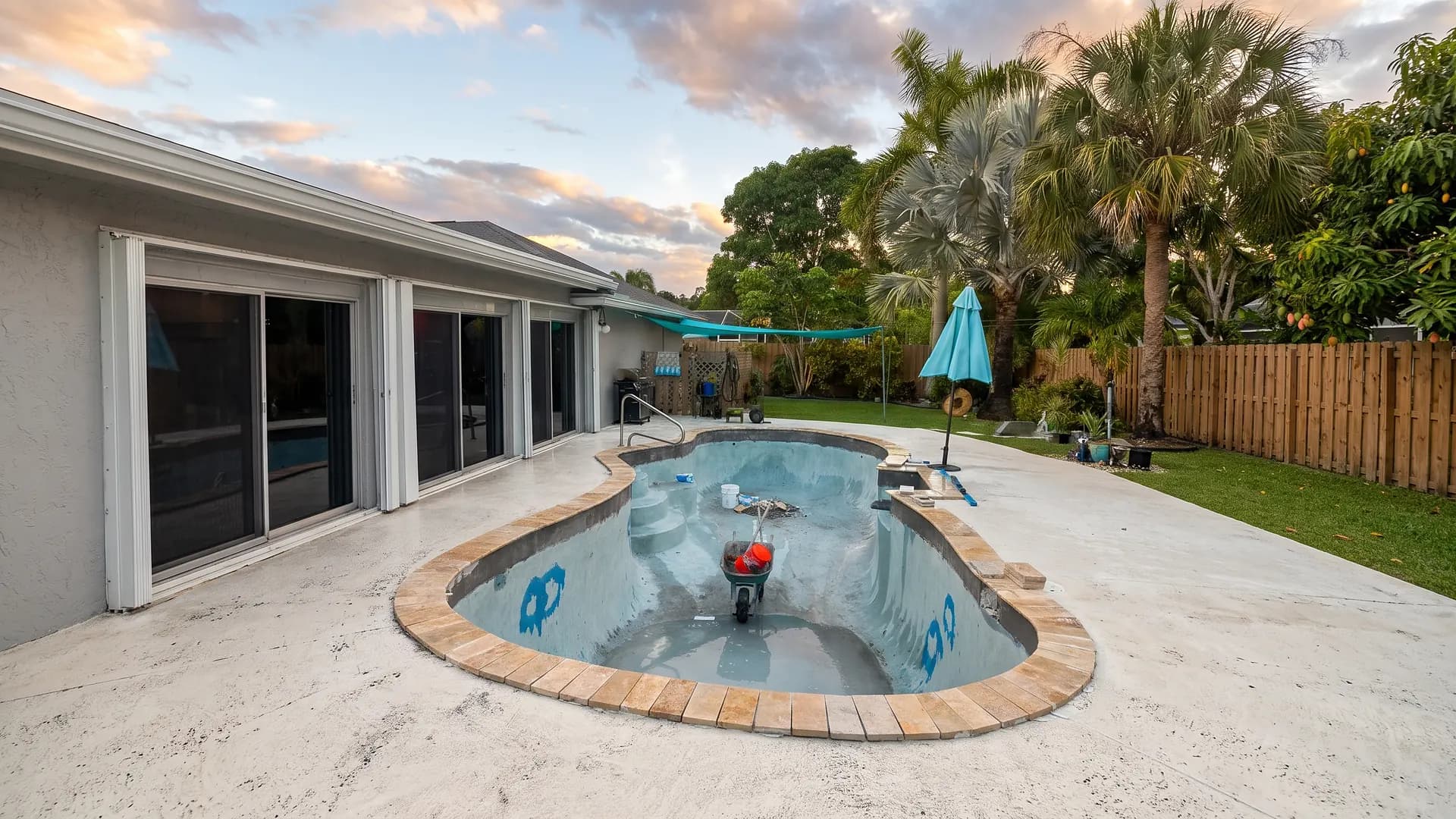
Pool coping is the cap that runs along the top edge of the pool wall. It is where people sit with their feet in the water, where swimmers push off and climb out, and it is one of the first parts of a pool to show its age.
This guide explains the signs that coping needs replacing, the materials South Florida homeowners usually choose, and what the work involves, so you can plan the project with confidence.
What coping does
Coping finishes the edge of the pool, covers the top of the wall, and helps direct splash water toward the deck drains instead of behind the pool shell. It also defines the look of the pool. A clean, even line of coping makes an older pool look cared for.
Signs it is time to replace coping
Loose or rocking pieces are the clearest sign. If a stone moves when you step on it, the bond underneath has failed and it can become a trip hazard.
Cracks, chipped edges and missing grout between pieces let water get behind the coping. Over time that can make the problem spread.
Stains that do not clean, faded or mismatched pieces from old repairs, and a gap between the coping and the deck are also common reasons homeowners decide to replace it.
Finally, many people replace coping simply because they are redoing the deck or resurfacing the pool, and it makes sense to update the whole edge at once.
Material options
Travertine is the most popular coping material in South Florida. It stays relatively cool, has a natural look and matches travertine decks.
Marble gives a brighter and more modern edge. Concrete paver coping, often with a rounded bullnose edge, is a more budget friendly option that pairs with paver decks.
Whatever the material, the profile matters: a rounded edge is comfortable to sit on and safer for swimmers.
Curved and kidney shaped pools
Straight pools are the simplest. Curved, freeform and kidney shaped pools need each piece cut to follow the line of the wall, with tight, even joints. This is where experience shows, and it is worth looking at photos of curved pools a contractor has finished.
How the project usually goes
First, the old coping and any damaged tile are removed carefully so the pool shell is not harmed. The bond beam is cleaned and checked.
Next, the new coping is set level, following the curve of the pool, with consistent overhang. Then the waterline tile goes in if it is part of the project, and joints are finished.
Depending on the work at the waterline, the water may need to be lowered. Your contractor should tell you ahead of time.
Coping, tile and deck together
Coping sits between the pool and the deck, so it makes sense to plan them together. When one crew handles the deck, coping and tile, the heights, slopes and joints line up and you avoid the gaps that sometimes appear when different companies work on each part.
What it costs
Coping is usually priced by linear foot around the pool, and the total depends on the material, the shape of the pool, removal of the old coping and whether tile is included. Market prices vary widely, so a site visit is the only way to get a real number.
Frequently asked questions
- Can coping be replaced without replacing the deck?
- Yes, in many cases. Sometimes the edge of the deck needs adjustment so the new coping sits right.
- Do I need to drain the pool for coping replacement?
- Not always. Work at the waterline may require lowering the water. It depends on the project.
- Does TL Pavers replace coping on curved pools?
- Yes. We set travertine and other coping on straight, curved and kidney shaped pools across South Florida.
Related services
Found this helpful? Make us a preferred source on Google.
Ready for an exact price?
Get a free, no-pressure estimate. Real numbers for your project, not a phone guess.